
The Comparison Trap
The Lamborghini I Never Wanted

3 Questions Deep is planting seeds of curiosity that will grow and reseed, spreading waves of wonder, understanding, and cooperation for future generations.
Consider subscribing for a weekly insightful article focused on the power of questions in an uncertain world.

“It is not the man who has too little, but the man who craves more, that is poor.”
— Seneca, Letters from a Stoic, Letter II
When I was 24, I wanted to be rich and own a Lamborghini. To get that, I needed a lot more income than we currently had. I was always looking for extra cash flow or ways to save. I was always thinking about the future. I was unclear about most things except we didn’t have enough money. I created my story of lack based on what Western Society said I should have to be successful.
Avoid Comparisons
If comparisons are bad, just find ways to stop comparing.
The C-A-R route helps you sort and understand claims. So, let’s test it.
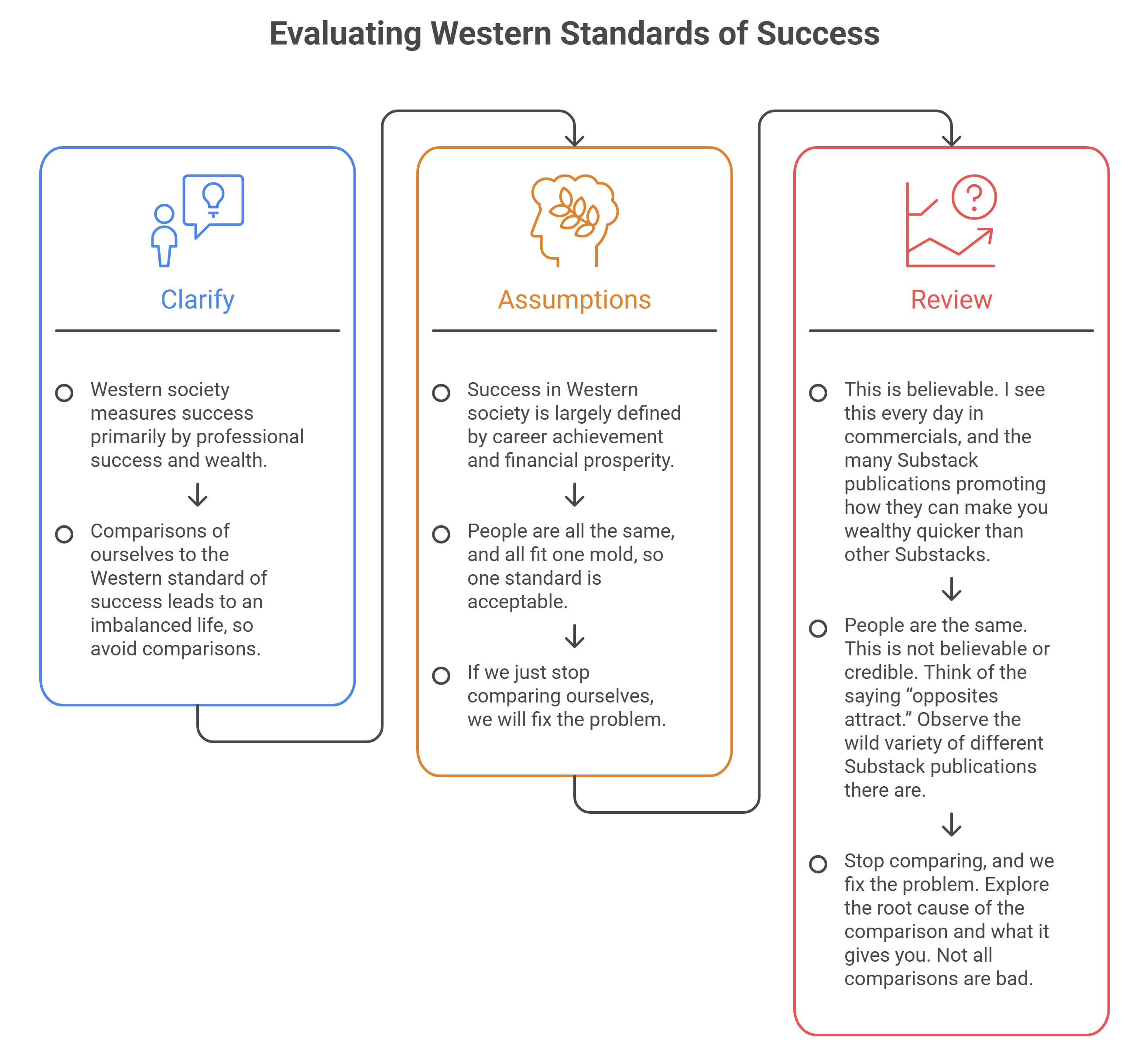
The C-A-R route is: Clarifications → Assumptions → Review
Clarify the proposal in a sentence or two.
Western society measures success primarily by professional success and wealth. Comparisons of ourselves to the Western standard of success leads to an imbalanced life, so avoid comparisons.
Assumptions
A. Success in Western society is largely defined by career achievement and financial prosperity.
B. People are all the same, and all fit one mold, so one standard is acceptable.
C. If we just stop comparing ourselves, we will fix the problem.
Review
A. This is believable. I see this every day in commercials, and the many Substack publications promoting how they can make you wealthy quicker than other Substacks.
B. People are the same. This is not believable or credible. Think of the saying “opposites attract.” Observe the wild variety of different Substack publications there are.
C. Stop comparing, and we fix the problem. Explore the root cause of the comparison and what it gives you. Not all comparisons are bad.
Types of Comparisons
Let’s understand the types of comparisons you may see. Not all comparisons are bad.
Here’s a breakdown of the main types of comparisons a person can make.
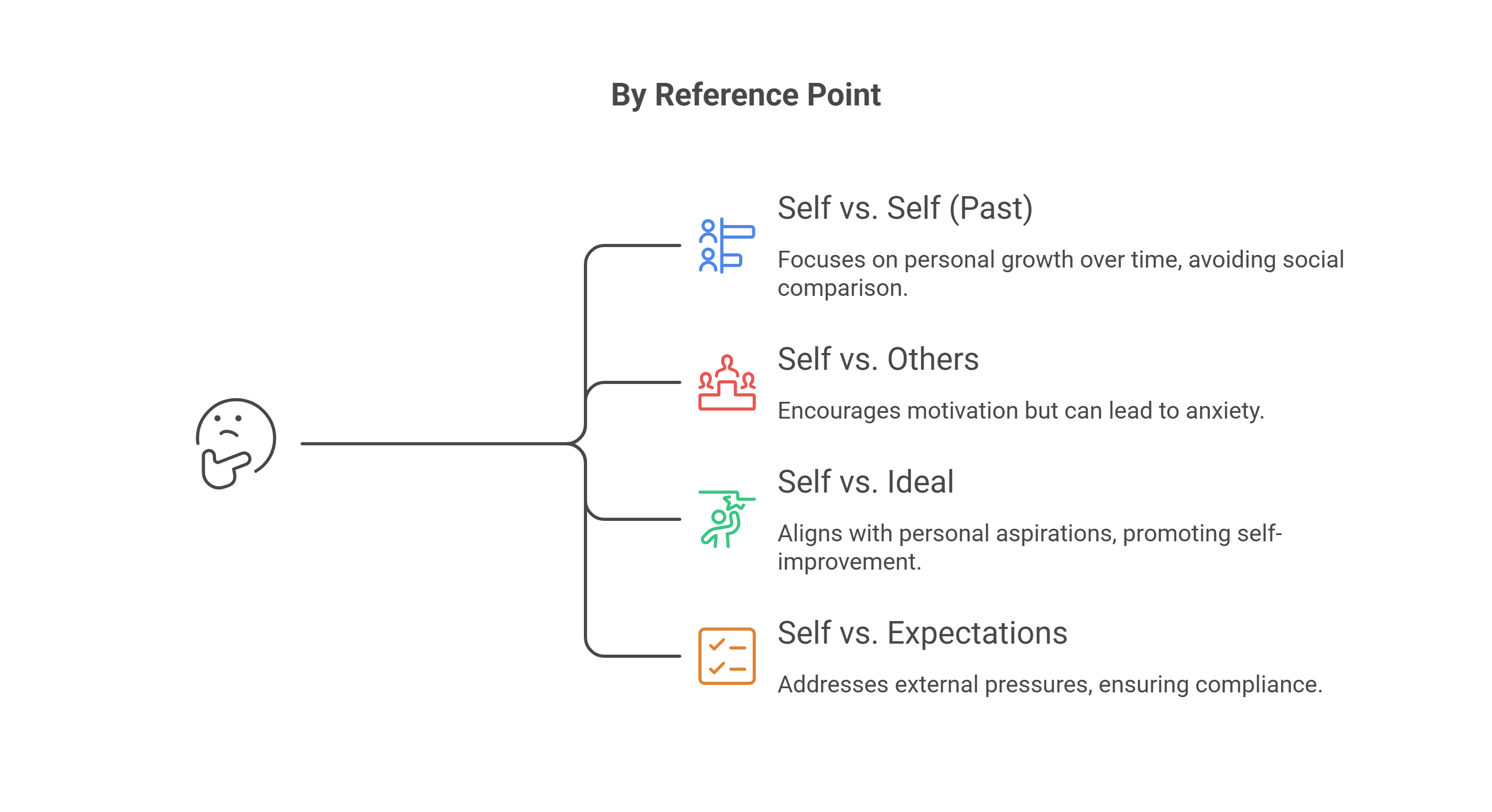
By reference point
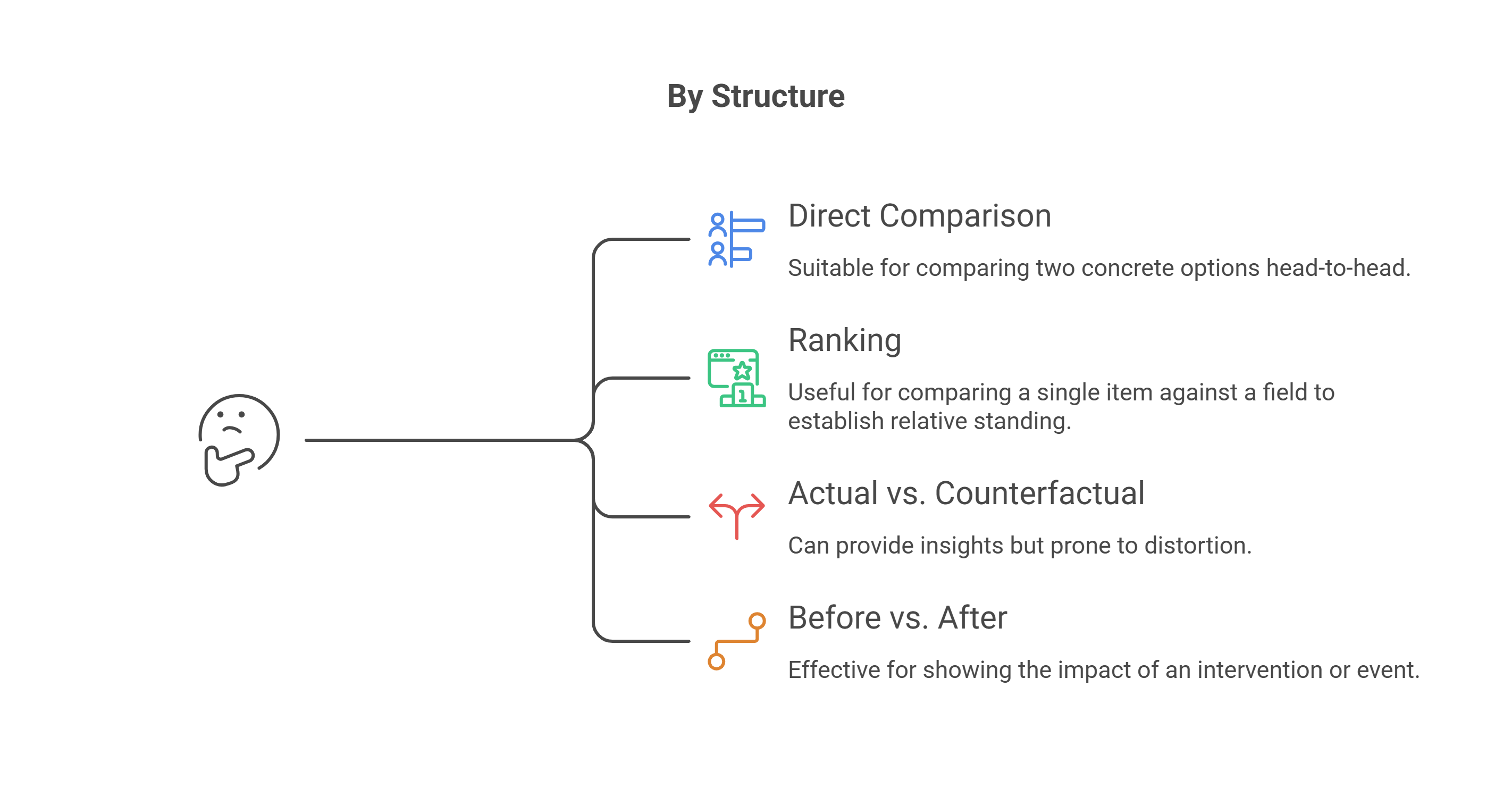
By structure
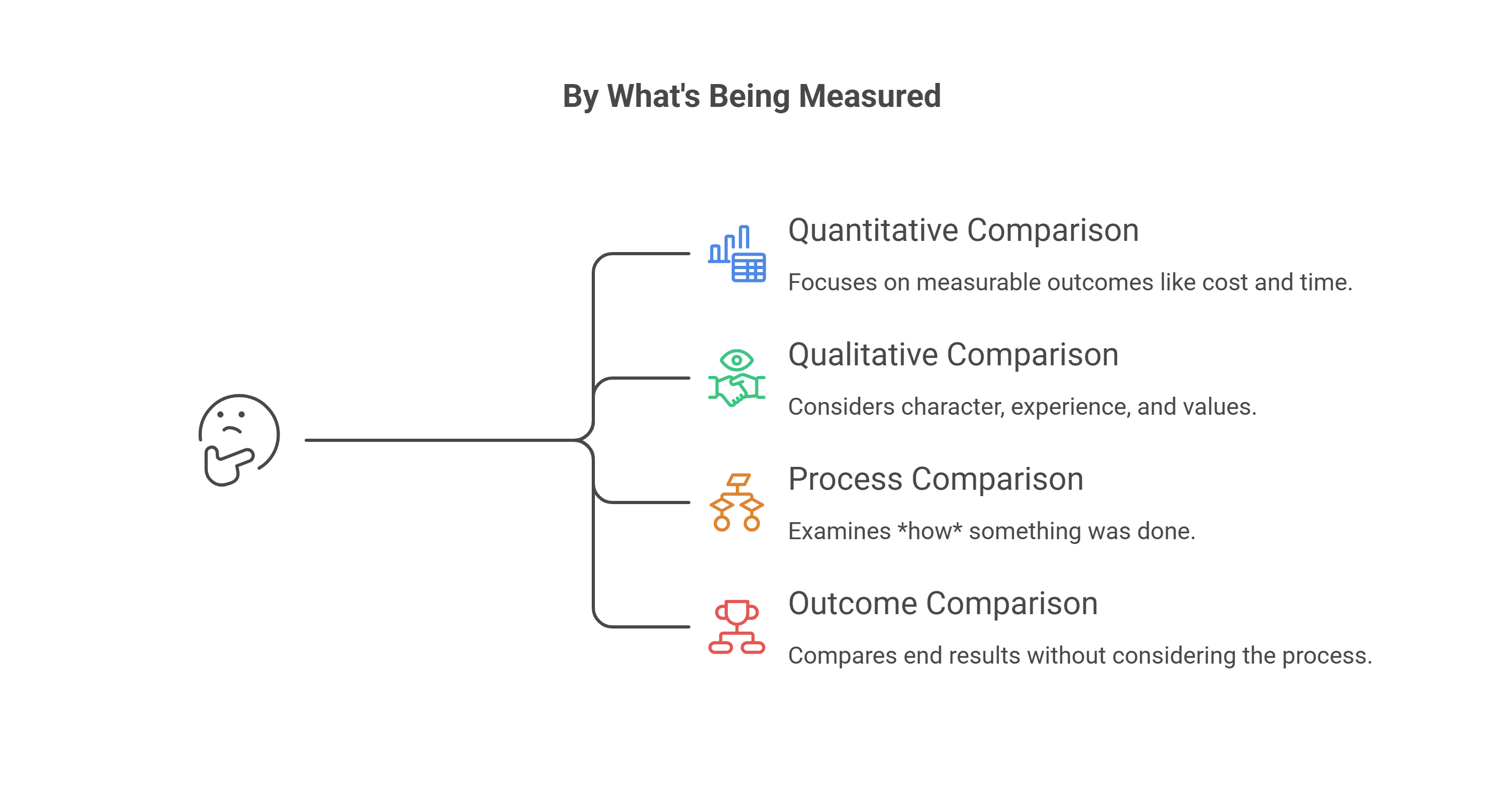
By what’s being measured
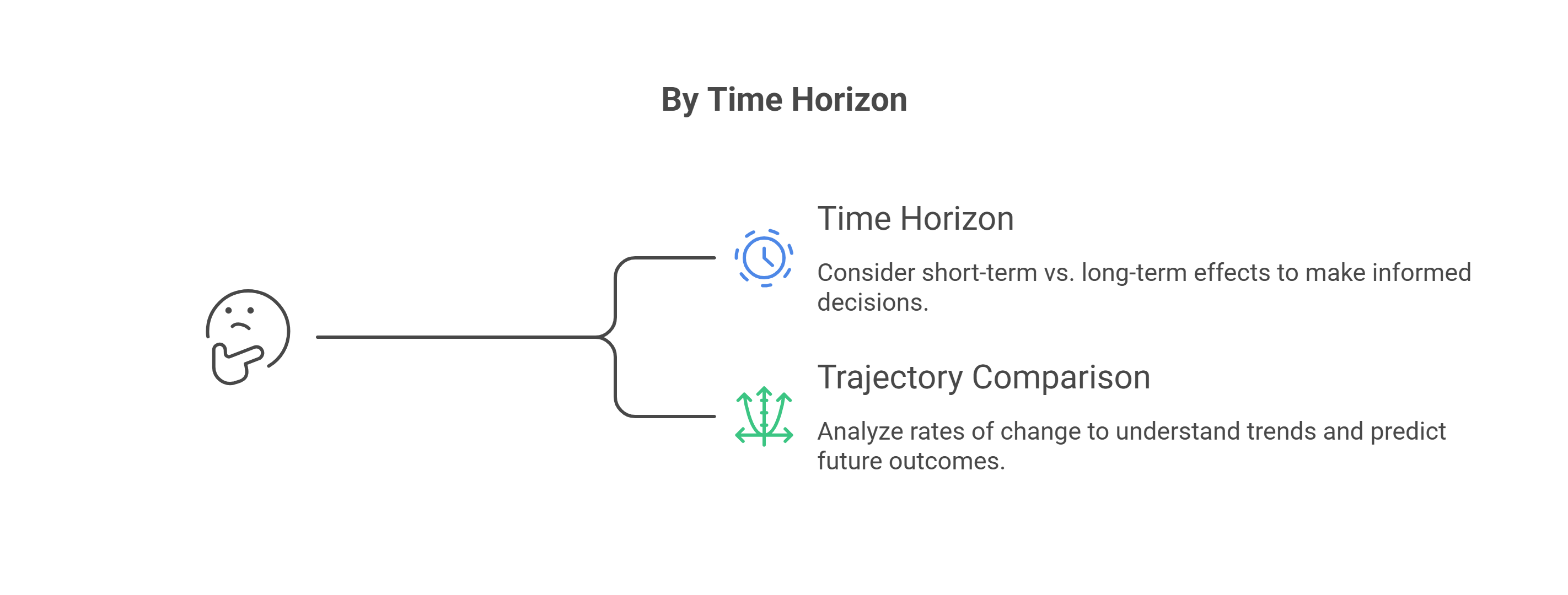
By time horizon
Here are 3 traps to look out for.
Comparing your inside view (how you feel, what you know about your effort) to someone else’s outside view (their polished result) — this is one of the most common sources of unfair self-comparison.
Comparing across mismatched baselines — different starting points, resources, or constraints — without adjusting for them.
Comparing to a cherry-picked reference class (only comparing yourself to top performers, or only to those doing worse).
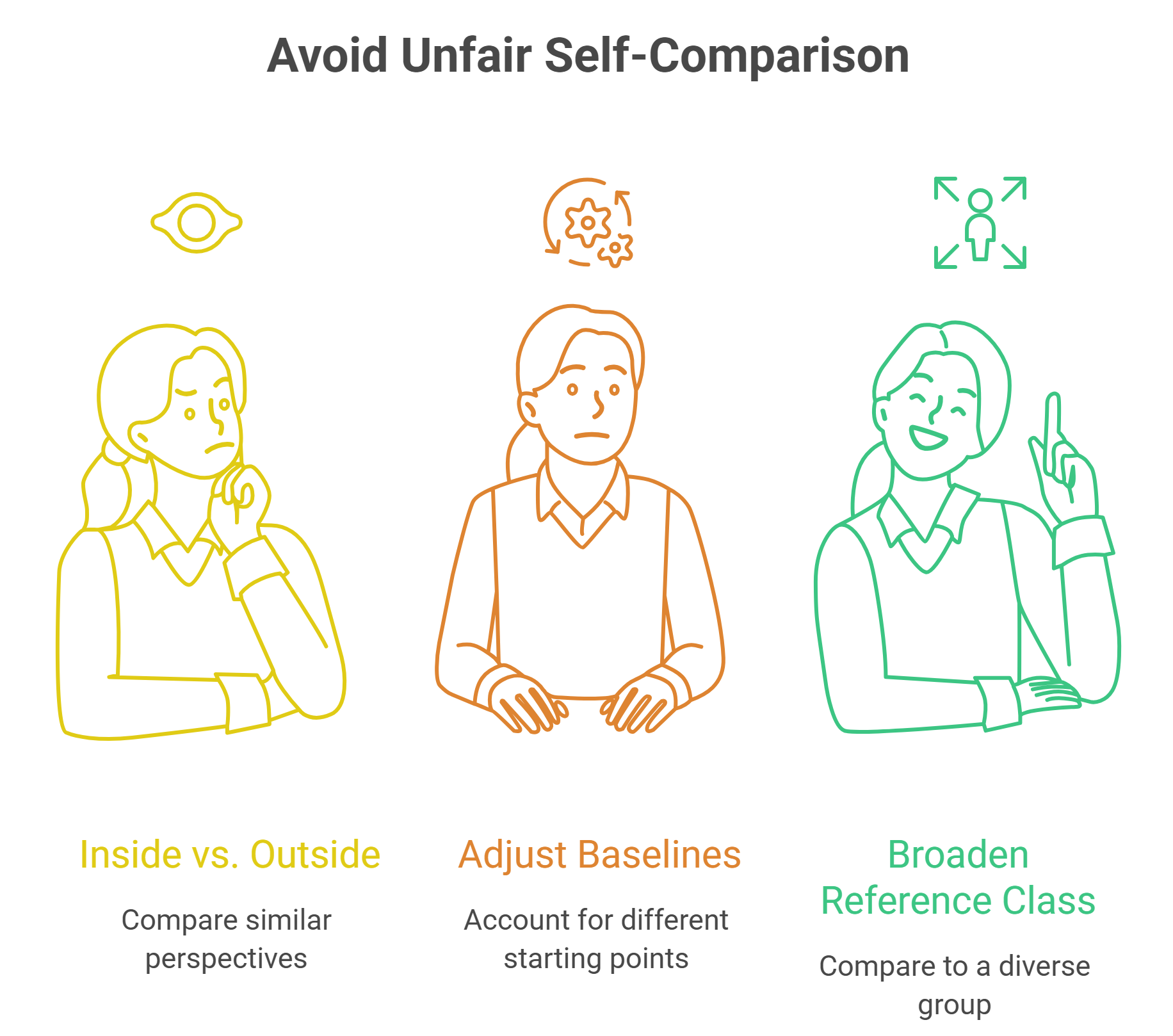
How to avoid these:
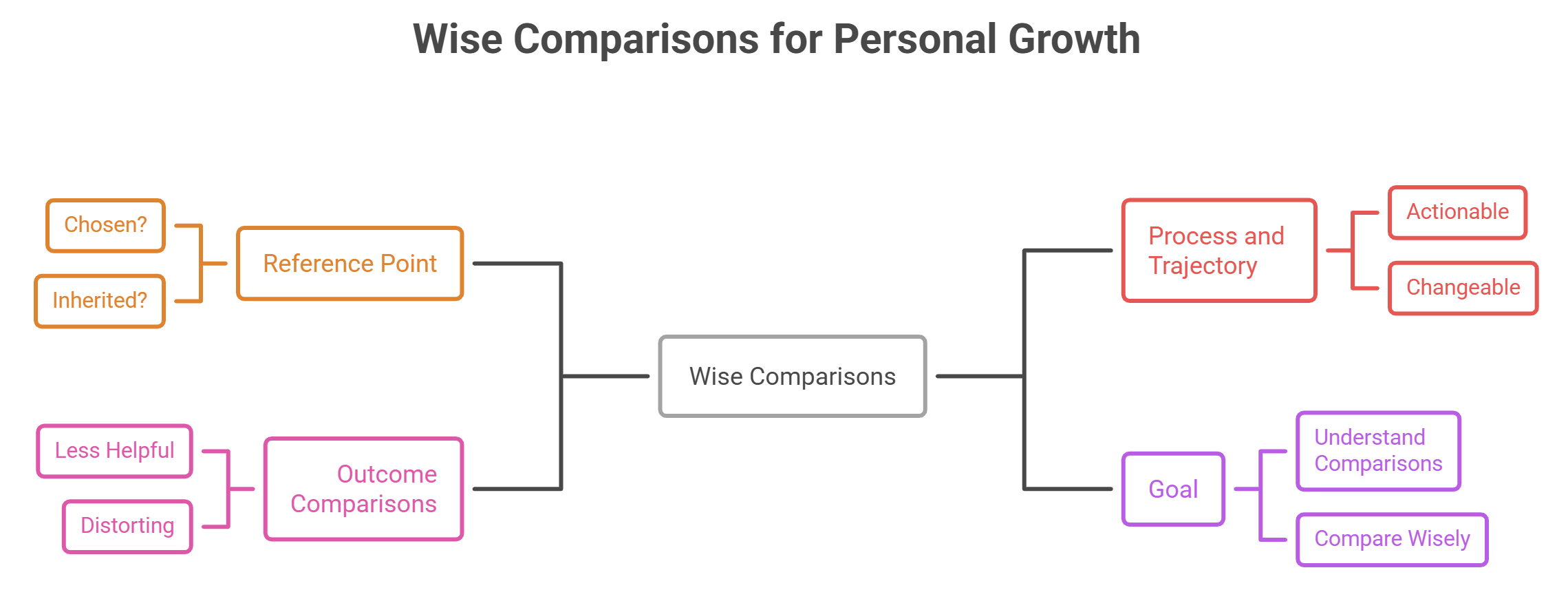
Before accepting a comparison, ask “did I choose this reference point, or was it handed to me?”
If handed to you, that’s your first red flag. 🚩
Consider some helpful ways to compare.
Self vs. an ideal — When the ideal is self-authored (not inherited), this is one of the most generative comparisons — it points toward a direction rather than a verdict.
Process comparison — Comparing how something was done is almost always more useful than comparing outcomes, because process is something you can actually change next time.
Trajectory comparison — Comparing direction/rate of change instead of a single snapshot avoids most of the distortion of point-in-time comparisons — “is the gap widening or closing” is far more actionable than “is there a gap.”
How to use these more:
When comparing to an ideal, audit it periodically for whether it’s still yours — ideals absorbed from outside sources quietly turn into “expectations” (a trap) if unexamined.
Reframe outcome-based comparisons into process-based ones where you can: instead of “their result beat mine,” ask “what did their process include that mine didn’t.”
Conclusion
Did I buy a Lamborghini? No. As I set personal goals, I realized I never choose an exotic car spontaneously. Honestly, I still fall into negative comparisons, but I am much more mindful of what I care about. Today, I want 3.5 million people asking 1% better questions. I am happy driving a Subaru and being debt-free. I am chasing different goals after a lifetime of goal setting and adjusting.
Be on the lookout for comparisons that are helpful or harmful. Choose wisely.
3 Questions to Ponder This Week
Consider one comparison you currently have, what’s the root of it? Is this helpful or harmful?
What would “enough” look like if you measured it only against your own past, not against anyone else?
What is a new type of comparison you plan to implement in your life this week?
A Quote to Ponder This Week
“Do not spoil what you have by desiring what you have not.”
— Epicurus, as recorded by Diogenes Laertius
Summary
Comparisons are not always the enemy; the key is knowing which ones are useful and which ones distort your view.
Before accepting a comparison, ask whether you chose the reference point or inherited it from someone else’s standards.
Process and trajectory comparisons are often more helpful than outcome comparisons because they show what you can actually change.
The real goal is not to compare less in every case, but to compare more wisely so you can focus on the life you actually want.
At 3 Questions Deep, we are planting seeds of curiosity that will grow and reseed, spreading waves of wonder, understanding, and cooperation for generations to come.
Join Us.
The 3 Questions Deep Team
In a world of talking points, your superpower is asking better questions.
Thanks for this very helpful, I think it helps to look at the whole picture - we are comparing just one datapoint - just one metric not everything that goes with it.
Comparison is the thief of joy. Not sure who originally said that, but I always heard it growing up. By applying the C-A-R framework correctly to any comparison or personal 'goal', we begin to understand that comparisons are absolutely necessary for personal growth. I appreciate the work you put into this article very much. Thank You